


Some air purifiers can remove VOCs—but most are not designed to. Effective VOC removal requires specialized gas-phase filtration, which many standard air purifiers simply don’t have.
Air purifiers are widely used to remove dust, pollen, and other airborne particles. But removing volatile organic compounds (VOCs) is a different challenge. Understanding whether an air purifier can reduce VOCs depends on what VOCs are, how they behave indoors, and how different air-cleaning technologies actually work.
Why VOC removal is often misunderstood
Air purifiers are often associated with cleaner, fresher-smelling air. Because odors may fade and air can feel “lighter,” it’s easy to assume that any air purifier improving indoor air quality is also removing chemical pollutants.
In reality, particle filtration and gas removal solve two very different problems. Most air purifiers are engineered to capture solid particles—not gases—and that distinction determines whether VOC removal is even possible.
What are VOCs?
Volatile organic compounds (VOCs) are carbon-based chemicals that easily evaporate into the air at room temperature. Indoors, they are released by many everyday materials and activities, including paints, cleaning products, furniture, building materials, fragrances, and combustion sources (1).
Unlike dust or pollen, VOCs exist as gases, not solid particles. Many are odorless, while others have a noticeable chemical smell. Depending on the compound and exposure level, VOCs can trigger adverse reactions in people with Multiple Chemical Sensitivity (MCS), and contribute to irritation, headaches, or other health effects—especially in poorly ventilated spaces.
Because VOCs behave differently from solid particles, they require different air-cleaning strategies than those used to capture dust or allergens.
Why most air purifiers don’t remove VOCs
VOCs are gaseous chemicals released from many everyday indoor sources, including:
- Paints, varnishes, and finishes
- Cleaning products and disinfectants
- Pressed-wood furniture and cabinetry
- New carpets and building materials
- “New Car Smell”
- Combustion sources such as vehicles or gas appliances (2)
Unlike dust or pollen, VOCs exist as individual molecules suspended in the air. These molecules are extremely small—often less than 0.001 microns in diameter—and move freely throughout indoor spaces.
Why HEPA filters can’t capture VOCs
HEPA filters are designed to remove solid particles, not gases.
- Standard HEPA filters capture particles down to 0.3 microns
- Even very high-efficiency particle filters capture particles around 0.003 microns
- VOC molecules are far smaller than these thresholds
As a result, VOC molecules pass straight through particle filters, regardless of how effective those filters are at capturing dust, allergens, or other solid particles.
How air purifiers can remove VOCs
To remove VOCs, air purifiers must include gas-phase filtration, not particle filtration. Two primary processes make this possible: adsorption and chemisorption.
Adsorption
Adsorption occurs when gas molecules stick to the surface of a solid material.
- The most common adsorbent used in air purification is activated carbon
- Activated carbon has a highly porous structure with a large internal surface area
- VOC molecules bind to the carbon surface as air passes through the filter
The effectiveness of adsorption depends on:
- The amount of activated carbon
- The type and pore structure of the carbon
- Adequate contact time between air and the filter media (3)
Thin carbon coatings or lightweight filters tend to saturate quickly and provide limited VOC removal.
Not all activated carbon performs the same
Activated carbon is widely used for VOC removal, but its effectiveness depends heavily on how it is made and structured. In air purification, two types of activated carbon are most commonly used: coconut shell–based carbon and coal-based carbon.
Coconut shell
Coconut shell-derived activated carbon is inexpensive and widely available, which makes it common in consumer air purifiers. However, it tends to be relatively soft and can generate fine carbon dust during transport or use.
Compared to coal-based carbon, coconut shell carbon typically contains fewer micropores, which are critical for capturing low-concentration odors and chemicals commonly found in indoor environments. Some individuals also report irritation or respiratory sensitivity when exposed to carbon dust from coconut shell media (4).
Coal-based activated carbon
Among coal types, bituminous coal offers a particularly wide range of pore sizes, making it well suited for adsorbing a broad spectrum of gases and VOCs at indoor concentrations (5)(6). For this reason, high-performance gas-phase air filters often rely on bituminous coal–based activated carbon rather than lighter alternatives.
In practice, the type and structure of activated carbon can matter as much as the amount used, especially when long-term VOC control is a priority (7)(8).
Chemisorption
Chemisorption involves chemical reactions that neutralize gases rather than simply trapping them (9).
- VOC molecules react with treated media
- Harmful compounds are broken down into more stable substances
- This approach is especially effective for reactive gases such as formaldehyde
High-performance gas filters often combine adsorption and chemisorption, which helps explain why VOC removal depends far more on filter media than on airflow or fan power alone.
Perception vs. Reality: Why odors sometimes linger
Even when an air purifier includes gas-phase filtration, VOC reduction may be inconsistent. Common reasons include:
- Insufficient carbon volume, limiting adsorption capacity
- Strong emission sources, such as new furniture or renovation materials
- High airflow speeds, which reduce contact time with filter media
- Carbon saturation, after which effectiveness drops
- Reduction in long-term performance, as filters lose efficiency over time
This helps explain why some purifiers seem effective at first but lose performance over time (5).
Air purifiers vs. Other ways to control VOCs
Air filtration is only one part of managing VOC exposure.
- Source control reduces VOC emissions at their origin
-
Ventilation dilutes indoor VOC concentrations by introducing outdoor air
- Air purifiers with gas-phase filtration remove VOCs already present in the air
In most indoor environments, combining source control, ventilation, and proper filtration is more effective than relying on any single approach.
How to determine whether an air purifier removes VOCs
If VOC reduction is a priority, several factors matter more than marketing claims:
- Carbon quantity, typically measured in pounds rather than grams
- Carbon type and pore structure, suited for indoor concentrations
- Presence of chemisorptive media for reactive gases
- Effective pre-filtration to protect gas media from particle clogging
- Proper sizing for the space and pollutant load
Without these elements, meaningful VOC removal is unlikely.
Gas filtration technologies to be cautious about
Not all technologies marketed for VOC removal are equally effective—or safe.
Ozone Generators
Some devices intentionally produce ozone as a cleaning mechanism.
- Ozone is a respiratory irritant and a major component of smog
- At levels considered safe indoors, ozone has little ability to remove VOCs
- Even low ozone exposure can worsen respiratory symptoms (10)
Photocatalytic Oxidation (PCO)
PCO systems use UV light and catalysts to break down gases.
- In theory, VOCs are converted into carbon dioxide and water
- In practice, many systems produce harmful byproducts, including formaldehyde
- Current evidence does not support consistent, real-world VOC removal (11)
What purpose-built VOC filtration looks like
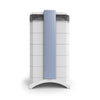
Some air purifiers are designed specifically to address chemical and gas-phase pollutants. For example, IQAir’s GC MultiGas XE uses a multi-stage approach that combines particle filtration with a large volume of activated carbon and chemisorptive media to target a broad spectrum of VOCs, odors, and gases.
Systems like this are typically used in environments where chemical exposure is a primary concern—such as homes near traffic corridors, spaces with ongoing off-gassing from building materials, or settings with heightened sensitivity to odors.
Practical Tips: How to reduce VOCs indoors
To better manage VOC exposure:
- Use low-VOC or no-VOC household products when possible
- Increase ventilation during renovations or when introducing new furniture
- Choose air purifiers designed specifically for gas-phase filtration, and ensure the unit is properly sized for the space; replace gas filters according to manufacturer recommendations
Frequently Asked Questions
Do all air purifiers remove VOCs?
No. Most air purifiers are designed for particle removal only.
Can HEPA filters remove chemical odors?
No. HEPA filters capture particles, not gases.
How much activated carbon is needed to remove VOCs?
Effective VOC reduction typically requires pounds of activated carbon, not thin layers.
Can air purifiers eliminate VOCs completely?
They can significantly reduce VOC levels, but source control and ventilation remain important.
Are ozone-based purifiers safe for VOC removal?
No. Ozone can worsen indoor air quality and respiratory health.
Conclusion
Air purifiers can remove VOCs—but only when they are designed for gas-phase filtration using sufficient activated carbon and chemisorptive media. HEPA filters alone are not effective for gases, and some technologies marketed for VOC removal can actually worsen indoor air quality.
For most homes, the best results come from combining proper filtration with ventilation and source control.